
How to remove hard water spots and sprinkler overspray from a car in Gilbert
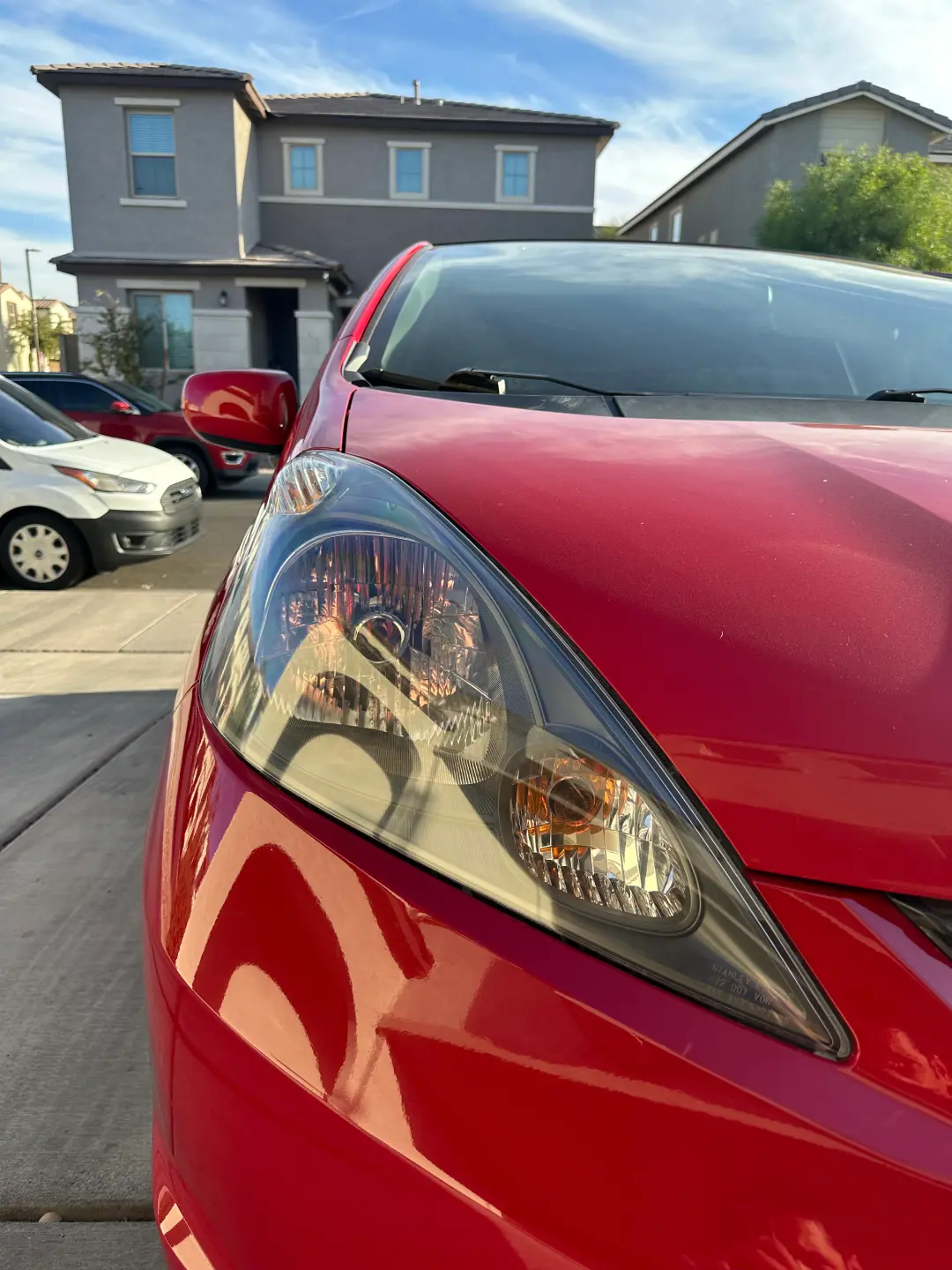
Fresh hard water spots come off with a gentle wash and a clay bar. Spots that have sat in the Gilbert sun for weeks can etch into the clear coat, and those need polishing. The fix that lasts is stopping the spots before they bake on: park out of the sprinkler’s reach, wash on a schedule, and put protection on the paint.
Why does Gilbert water leave spots on your car?
Because it carries a lot of dissolved minerals. When a drop dries on hot paint, the water leaves and the calcium and magnesium stay behind as a white ring (source).
Three local habits make it worse:
- Driveway parking. Gilbert’s master-planned streets are narrow and full, so most cars live on the driveway, right next to the lawn and the drip lines.
- Sprinklers that run year-round. Overspray hits the doors, wheels and glass on the side facing the yard, often overnight, and the sun bakes it on by mid-morning.
- Hot panels. A dark hood in July dries a drop in seconds. Washing in the afternoon sun leaves spots of its own.
Monsoon storms add a fourth source. The rain picks up desert dust on the way down and dries into gritty spots on the paint and glass (source).
How do you tell a surface spot from an etched one?
Wash the panel, dry it, and look at it in shade.
- Type 1, surface deposits. White rings that sit on top of the paint. You can feel them as a slight roughness. They come off with the right wash and decontamination.
- Type 2, stuck-on minerals. The ring stays after a wash and feels gritty under a clean fingertip inside a plastic sandwich bag. A clay bar or a mineral remover is the next step.
- Type 3, etching. The paint is smooth to the touch, but you can still see the outline of the drop, often as a faint dimple. The minerals ate into the clear coat. Only polishing levels it.
Dark paint shows every stage first. Black, navy and dark gray cars on west-facing driveways get the worst of it.
How do you remove hard water spots safely?
Work from the gentlest step up, and stop as soon as the spots are gone.
- Wash in shade, early or late. Cool panels give you time to rinse before anything dries. Wash one section at a time and dry it right away with a clean microfiber towel.
- Never scrub dust. Desert dust is fine and sharp. Wiping it off a dry car drags it across the paint and leaves swirl marks. Rinse first, always.
- Try a mineral or water spot remover. These are mild acids made for paint. Use one panel at a time, out of the sun, and rinse well. Leaving it to dry can do its own damage.
- Clay the paint. A clay bar with lubricant lifts stuck-on minerals the wash left behind. The paint should feel smooth as glass when you finish.
- Seal it. Bare paint after clay is wide open. A sealant or wax gives the next sprinkler hit something to sit on besides your clear coat.
Skip vinegar soaks, household cleaners and magic erasers on paint. They can strip protection or haze the finish.
A Wash, Clay Bar & Sealant covers steps 1, 4 and 5 in one visit, in your driveway.
What if the spots won’t come off?
Then they are etched, and the answer is paint correction. A machine polisher removes a very thin layer of clear coat until the floor of the etch is level with the paint around it.
Light etching often clears with a single polishing step. Deep rings on a dark hood or roof can take two. A detailer should test a small section first and tell you how much of the damage will come out before quoting the whole car. Some marks are too deep to remove fully without thinning the clear coat too far, and an honest quote says so.
Glass etches too. Side windows facing the lawn can cloud over with rings that a glass polish has to remove.
How do you stop hard water spots from coming back?
You cannot change the water, so change how long it sits on the paint.
- Move the car or the spray head. Turn sprinkler heads away from the driveway, or set them to run after you leave for work so you can rinse that evening.
- Rinse overspray the same day. A spray of clean water and a quick dry takes it off before the sun bakes it on.
- Wash every 2 to 3 weeks in dust and monsoon season. That cadence keeps minerals from stacking up (source). A Monthly Maintenance Detail puts that on the calendar for you.
- Protect the paint. A sealant buys months. A ceramic coating lasts years and is slick enough that most spots wipe off during a normal wash instead of bonding.
A coating does not make paint spot-proof. Minerals still dry on top of it, and if they sit for weeks they can mark the coating. The difference is that the coating takes the hit, and a wash usually clears it.
When should you call a pro?
Call one when:
- The spots survive a careful wash and a water spot remover
- You can see rings on smooth paint, which means etching
- The glass looks cloudy after cleaning
- You want a coating, since the paint has to be decontaminated and polished before one goes on
Jer's is fully mobile and brings its own water and power, so the work happens on your driveway with no hose or outlet needed. See every service and rate on the pricing page, or book a visit.